Share Lee William Scoggins's obituary with others.
Invite friends and family to read the obituary and add memories.
Stay updated
We'll notify you when service details or new memories are added.
You're now following this obituary
We'll email you when there are updates.
Select your format and elements to print
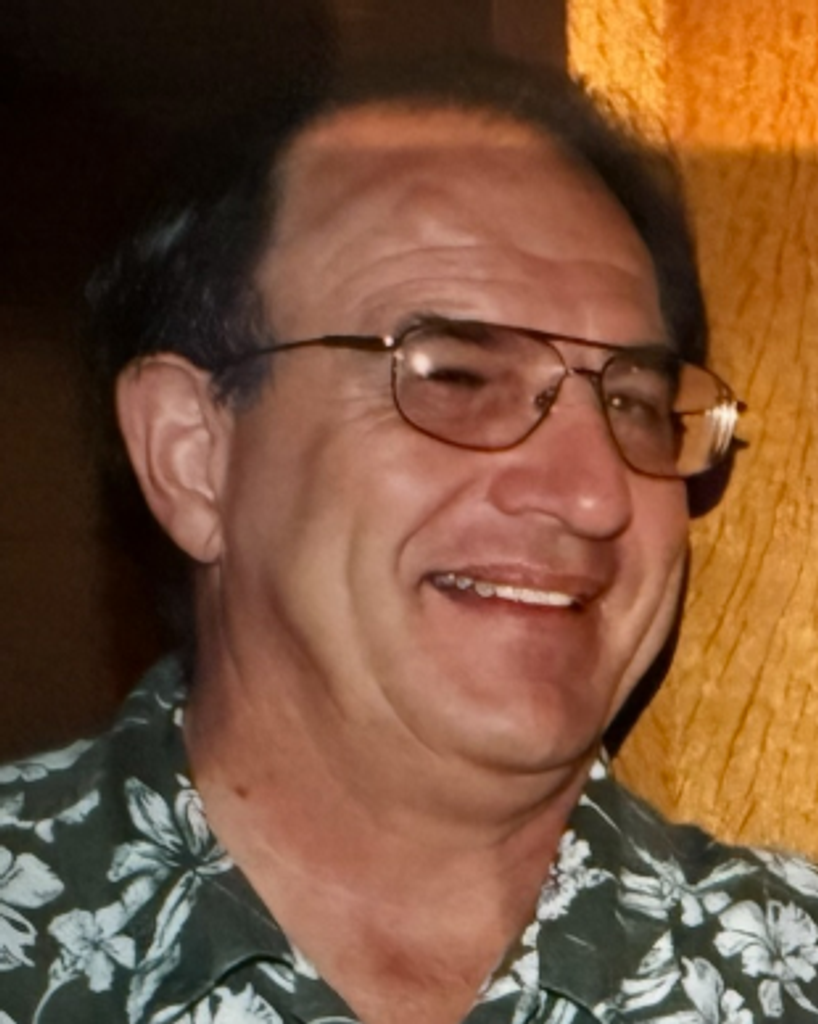


Lee William Scoggins
Sep 30, 1946 — Aug 14, 2026
Gilroy, CA
Lee William Scoggins was born in Gilroy, California, on September 30, 1946, to Lee Mitchell Scoggins and Beulah May Slade.
Lee came from a hardworking, down-to-earth family with deep roots throughout Santa Clara County. Hard work, practicality, and frugality were important values in the Scoggins household, and those values would stay with Lee throughout his entire life.
Lee's father, Lee Mitchell Scoggins, was a World War II veteran who served with the United States Navy Seabees. After the war, he returned home to Gilroy, where he had also been born, married Beulah, and went to work for Caltrans as a civil engineer. He worked on a number of important local projects, including Hecker Pass Highway and Pacheco Pass Highway.
Lee deeply admired his father. In the stories he told throughout his life, his father was almost larger than life—a strong, confident, rock-solid man whom Lee respected enormously.
But perhaps no person had a greater influence on Lee than his mother, Beulah.
Beulah embodied efficiency, economy, preparedness, and frugality. One small story captures that part of her character. When Lee went away to college, his mother sent him a letter containing a $50 bill. She told him to keep that $50 and always have it available in case something happened. She knew from her own experience how important it was to have something put away when life suddenly changed.
Lee never forgot lessons like that.
And his connection to his mother went far beyond the practical lessons she taught him. Even in the final days of Lee's life, simply talking about his mother could bring him to tears. His love for her remained that deep throughout his life.
From an early age, Lee loved equipment, trucks, engines, motorcycles, and hunting. He hunted with his father around Pacheco Pass and the area around Henry Coe State Park. He was fascinated by motorcycles, although his father would not allow him to ride one. So Lee found other outlets for that mechanical curiosity, working with small engines and whatever mechanical projects he could get his hands on.
After high school, Lee joined the Air Force Reserve. He also worked for the California State Parks as a ranger at Mount Madonna near Gilroy.
And Mount Madonna would become important for another reason.
It was there that Lee met Connie, who would become his wife. Connie was checking into Mount Madonna when their paths crossed. Lee asked her out, and that was the beginning of their life together.
Illness eventually brought Lee's early careers with the Air Force Reserve and the state parks to an end. He was honorably discharged from the Air Force and also had to leave his position as a ranger.
So Lee did what he would do throughout his life: he found another way forward.
He began driving trucks for Gilroy Lumber, delivering lumber and building materials throughout the Monterey Bay area. Eventually, he joined Consolidated Freightways, the trucking company that would become the center of his working life.
Lee spent approximately 40 years with Consolidated Freightways, until the company went out of business. He later finished that portion of his career working for DHL.
Lee was also a lifelong Teamster and a strong supporter of organized labor. At one point, he served as a trustee for Teamsters Local 287 in San Jose.
Driving trucks was his profession, but working with machinery was simply part of who Lee was. At home, there were always vehicles, motors, diesel engines, carburetors, tools, and projects.
Retirement didn't really mean retirement for Lee.
He continued working part-time driving water trucks throughout the Bay Area, including work associated with Cal Fire during local fires. Sometimes he operated a water truck at the job site; later, he helped provide backup vehicles for projects.
In fact, Lee worked until virtually the final day that he was able.
His last day of work was a Thursday.
Friday night, he was taken to the hospital by ambulance.
It is difficult to imagine a more fitting reflection of the work ethic Lee inherited from his parents. He quite literally worked his entire life.
But Lee's life was never only about work.
At home, Saturdays meant projects. There was grass to mow, something to repair, yard work to finish, or something that needed to be hauled to the dump. His son often came along.
And those trips to the dump became something more than chores.
On the way home, father and son might stop at the local store for a soda or some candy. They were small moments at the time—the sort of moments nobody realizes are important while they're happening—but decades later, they remain some of the memories that last.
Lee also loved camping, fishing, and hunting. Family vacations often meant packing everything up and heading for the Sierras or a local lake, setting up camp, and staying for a week or sometimes two.
There were fish to catch, days on the water, evenings at camp, and long stretches of time together.
Those trips gave the young Scoggins family something precious: time to simply be a family.
Lee was also a man of projects.
There might be an old vehicle sitting in the yard that he was "gonna" restore. Before that project was finished, another one might appear. Maybe this time it was a boat.
"I'm gonna" became something of a Lee-ism.
Everyone knew Lee could dream bigger and faster than he could finish all those projects. But every once in a while, one of those dreams came together.
The boat did.
Lee got that boat running, took it to the Sierras with his family, and some wonderful memories were made on the water.
Lee also had rules when it came to working with him.
First: put his tools back where you found them.
Every tool needed to make it back into the toolbox when the job was finished.
And then there was one of Lee's most memorable pieces of advice:
"If you have to force it, you're doing it wrong."
He may have been talking about a nail, a screw, a wrench, a bolt, or some stubborn mechanical part.
But it turns out that wasn't bad advice for life, either.
Lee could be strong and strict. He believed in discipline, responsibility, and preparing for the future. His son knew from childhood that there were rules: be home when you were supposed to be home, respect the household, and as you grew older, keep moving forward.
If you were going to live under Lee's roof, you needed to be working, going to school, or serving in the military.
You needed to be doing something with your future.
But underneath that sometimes stern exterior was something that became easier to see as the years passed.
Lee loved deeply.
He did not always know how to express that love. But it was there—in his devotion to his family, his friendships, the things he kept, the memories he treasured, and the people he remained connected to.
And when the people who knew Lee are asked how they would describe him, the answer can be wonderfully simple:
He was a great guy and a good friend.
Service Schedule
Past Services
Memorial Service
Saturday, August 22, 2026
Starts at 3:00 pm (Pacific time)
Habing Family Funeral Home
Guestbook
Visits: 960
This site is protected by reCAPTCHA and the
Google Privacy Policy and Terms of Service apply.
Service map data © OpenStreetMap contributors